
Every November, families across the country gather to celebrate National Adoption Day. Alongside child welfare workers, social workers, attorneys, judges, and the people who have become their village, families fill courtrooms to celebrate children finding their forever families. For some, this day marks the end of months of uncertainty. For others, it comes after years of waiting, loving, advocating, and hoping.
It is a day filled with smiles, happy tears, photographs, and new beginnings. It is a day worth celebrating.
But what happens when the celebration ends, the courthouse empties, and everyone goes home?
You might think this is where all the hard work ends. In reality, the heavy lifting is only just beginning.
Adoption Is More Than a Day of Celebration
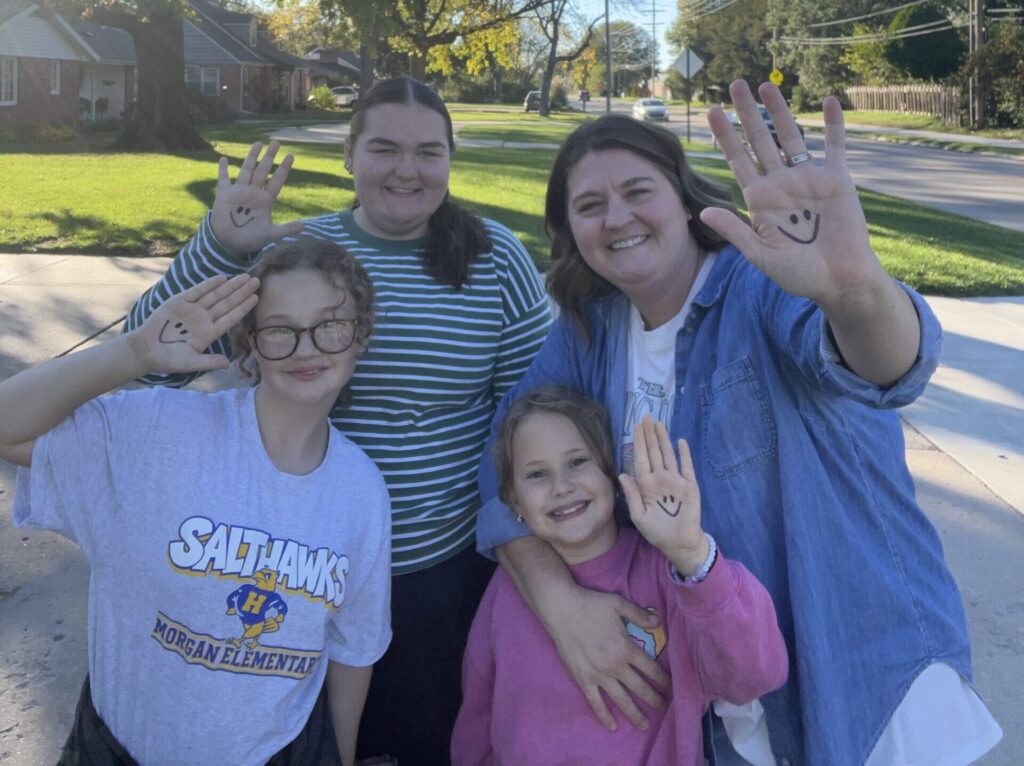
I am the mother of three incredible daughters, two of whom joined our family through adoption, and to me, adoption is so much more than a day on the calendar.
To be honest, I didn’t set out to adopt. But when life presents me with an opportunity to help, I have a hard time saying no. For me, like so many others, what started as helping turned into forever.
Some days, life as an adoptive parent is a whirlwind of emotions. Parenting children who have experienced trauma can take what feels like ten times the effort and brainpower. It can mean doing the same things over and over, wondering if anything is changing, only to realize that progress doesn’t always look the way we expect it to.
It can mean building connections and relationships with biological family members so your child can maintain important relationships with grandparents, aunts, uncles, and others who are part of their story. It can mean having more hard days than good ones in a week. And sometimes, it means carrying instant mashed potatoes, noise-canceling headphones, and peppermints in your purse because you never know what the day might bring.
Adoption isn’t always picture-perfect. Adoption can hold both joy and grief. While we celebrate the families formed through adoption, we also recognize that adoption often begins with loss. Our children may carry questions about their identity, their biological families, and the experiences that brought them to us. Making space for those feelings, even when they are difficult, is part of loving and supporting them.
But every day, I am reminded that being the mom of these two incredible girls is one of the greatest honors of my life.
Every once in a while, I get to see the hard days pay off. I see the effort my daughters put into making connections with their peers. I see them work through something that once felt impossible. Sometimes, they finally remember that thing I have told them 374 times in one week!
Those moments might seem small to someone looking in from the outside, but to our family, they are victories worth celebrating.
Adoption doesn’t mean the hard things disappear. It means continuing to show up, learning together, celebrating progress, and loving your child through all the moments in between.
What Does Adoption Mean to Them?
I asked my three daughters what adoption means to them. Their answers reminded me that adoption is not just one story or one experience. It can look and feel different for everyone involved.
My 8-year-old, who is adopted, said:
“What adoption means to me is kids being able to find their families.”
My 11-year-old, who is also adopted, shared:
“I am adopted and I have always known I was. It really hasn’t affected my life at all. It doesn’t make me feel any different or special. I just feel like everyone else.”
She also added:
“But it also means that a child was in foster care and found out their parents couldn’t take care of them.”
Her words are a reminder that adoption is part of her story, but it doesn’t define her entire identity. She is a child who wants to feel like every other child, and being adopted is simply one part of who she is.
My 16-year-old, my biological daughter, offered a different perspective:
“Adoption means taking in a child as your own after their parents can’t, but it also means so much more to me with my two little sisters. They have been with us since I was five, and I am getting closer to moving out. Seeing how life can be so different for them, even when they have been with us for so long, has made me understand others and always celebrate the little things.”
As a mom, hearing these perspectives means so much to me. Each of my daughters experiences our family and their relationships in her own way. Their answers remind me that adoption affects more than the child who is adopted or the parents who adopt. It shapes siblings, extended family members, and the people who walk alongside a family through the years.
It also reminds me that we should never assume we know what adoption means to someone simply because we know parts of their story. Sometimes, the best thing we can do is listen.
Be a Villager
Supporting adoption doesn’t always mean carrying instant mashed potatoes in your purse. It doesn’t even have to mean being the person who adopts a child.
Sometimes, it simply means being someone’s villager.
Every family needs people who show up, especially during the seasons that feel overwhelming. Foster and adoptive families are no exception. In fact, having a supportive village can make a tremendous difference as families navigate the joys, challenges, and unexpected moments of parenting.
Being a villager might look like bringing dinner on a hard day, offering to help with school pickup, listening without judgment, celebrating a small victory, or simply checking in and asking, “How are you really doing?”
It might mean learning about trauma and understanding that a child‘s displaying behaviors can might actually be them communicating a need. It might mean supporting a parent who needs a moment to regroup, being patient when plans change, or making space for a child’s complicated feelings about their story and biological family.
You don’t have to have all the answers. You don’t have to fix everything. You just have to be willing to show up.
Start by looking at the friends, family members, or neighbors in your life who are fostering, have adopted, or are navigating the complexities of caring for children who have experienced trauma. Meet them where they are, ask what support would be helpful, and let them show you what being part of their village looks like.
And remember, being a villager isn’t just something we do in November.
More Than a Day on the Calendar
National Adoption Month gives us an opportunity to celebrate adoption, recognize families, and bring awareness to the needs of children and youth who are waiting for permanent, loving connections.
But adoption doesn’t stop when the courthouse doors close. It continues through ordinary Tuesdays, difficult school mornings, family traditions, unexpected challenges, and the little victories that might go unnoticed by everyone else.
It lives in the patience it takes to build trust, the work of maintaining important relationships, the love that grows over time, and the community that surrounds a family when the journey gets hard.
So, this November, celebrate National Adoption Month. Celebrate the families who are growing, the children who are finding permanency, and the people who make up their villages.
But when November ends and another day on the calendar begins, keep showing up.
Because adoption is not just another day on the calendar. It is a lifelong journey, and no family should have to walk it alone.